

Using Media Manager in Salesforce Flows



.svg)
Table of Contents


Introduction: Files Are Part of the Process, So Why Are They Outside It?
Salesforce Flow powers most modern business processes. Onboarding, field inspections, service requests, approvals — all guided through Screen Flows. But the moment files enter the picture, the experience fractures.
You can upload a file inside a Flow. But can users preview it, compare it to earlier versions, organize it into folders, and act on it without leaving the guided process?
"I've built a Salesforce Screen Flow for inspections. I want my users to take or upload photos as part of that flow. Can I use Media Manager here?" — Common client question
The answer is yes. And this guide shows you exactly how it works.
The Problem: Salesforce Flow Handles Steps, Not File Experiences
Most Salesforce Screen Flows treat files as a simple input — upload and move on. But real-world file-driven workflows are far more complex:
- Field inspectors need to compare a new photo against the previous visit's images
- Case agents need to verify document completeness before escalating
- Onboarding teams need to view, validate, and version-control uploaded forms
- Sales reps need context from Account-level files while completing an Opportunity Flow
Native Flow file handling doesn't support any of this. Users end up:
- Jumping out of the Flow to find files on the record
- Opening multiple related records to compare documents
- Losing their place in the guided process mid-task
Files are part of the process but native Flow keeps them outside the experience.
The Solution: Launch a Full File Workspace from Salesforce Flow
Media Manager integrates with Salesforce Flows to replace the basic upload interaction with a complete file management experience directly inside the Flow step.
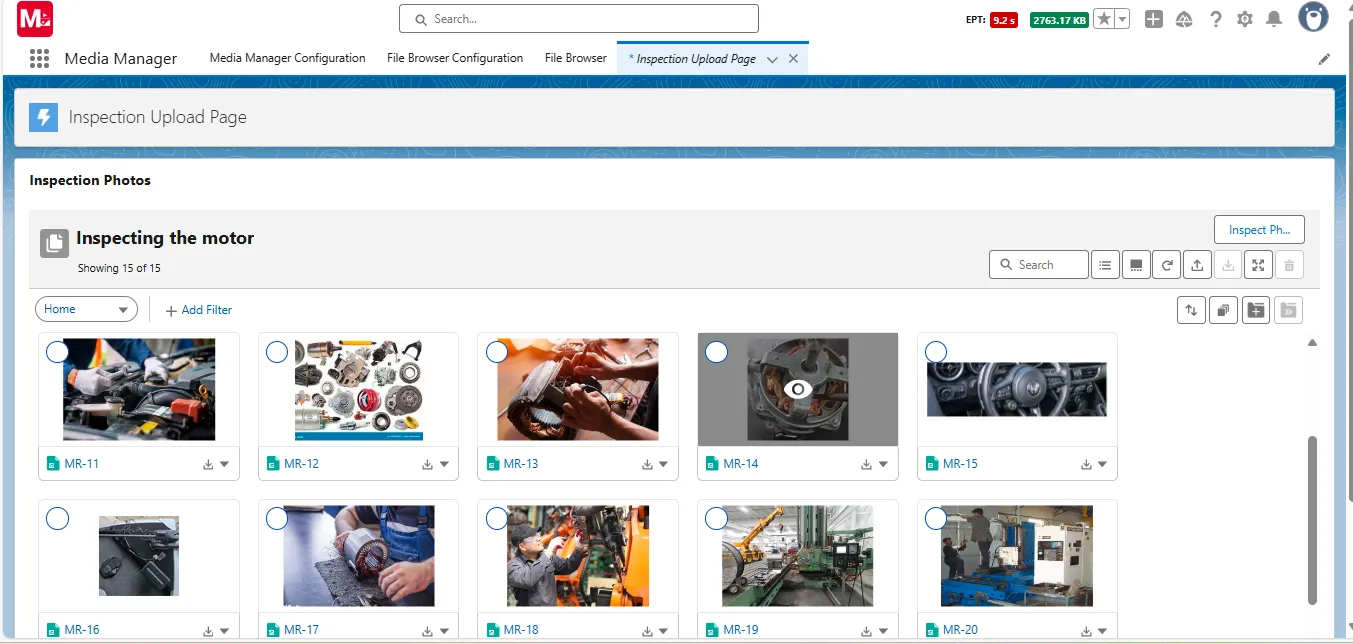
Instead of a simple file upload component, users get:
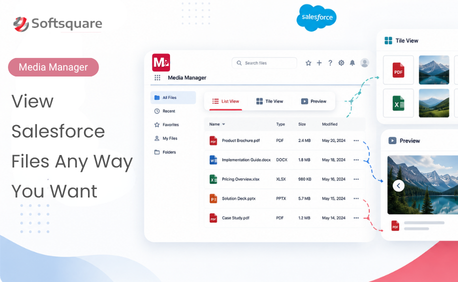
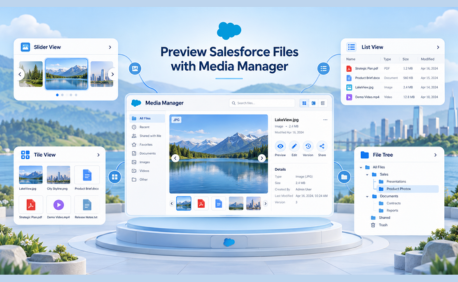
- Multi-format file preview: Slider, List, and Tile views for different tasks
- File Tree navigation: access files from related records (Account, Contact, Case) in one panel
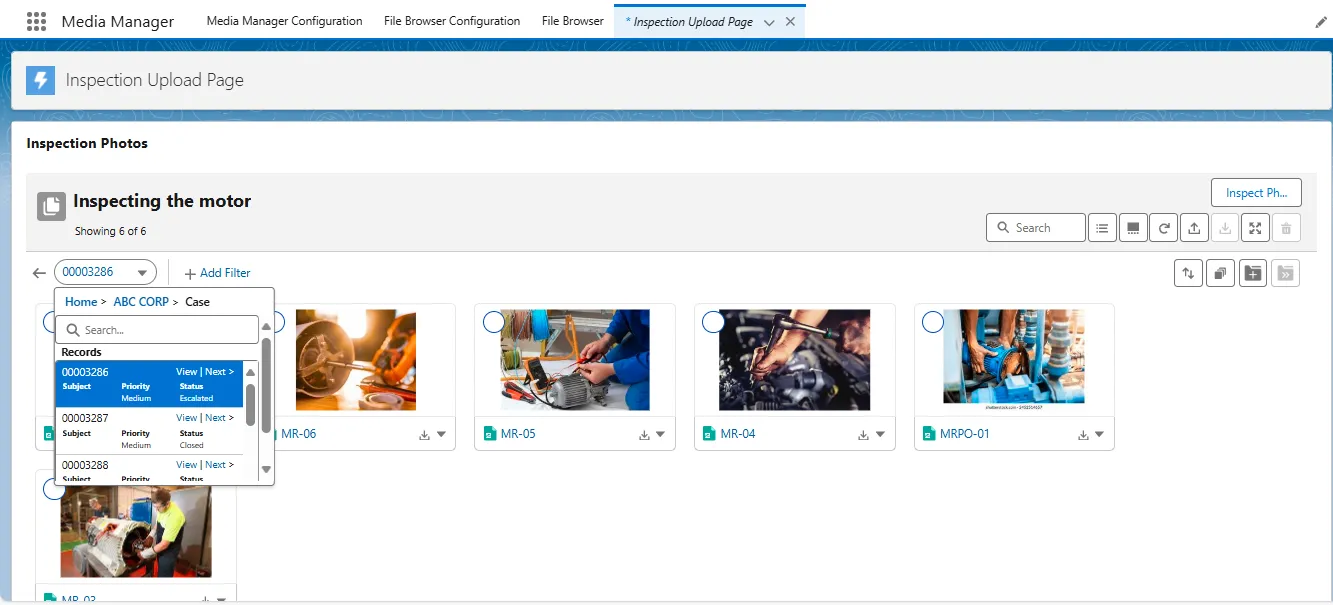
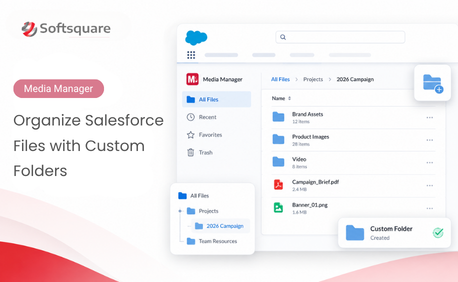
- Folder-based organization: structure files by stage, type, or category
- Grouping and filtering: locate the right file instantly
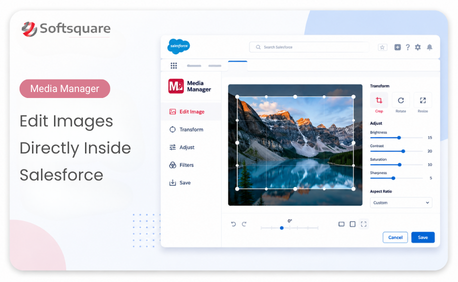
- Inline editing and version control: update files without leaving the Flow
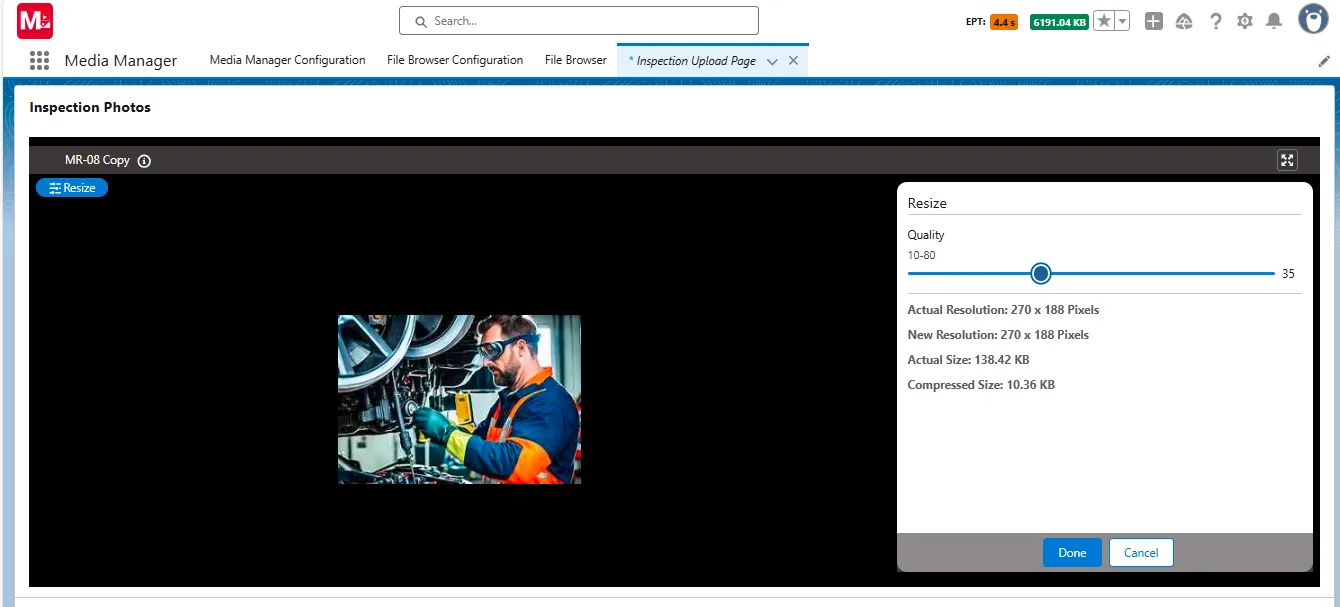
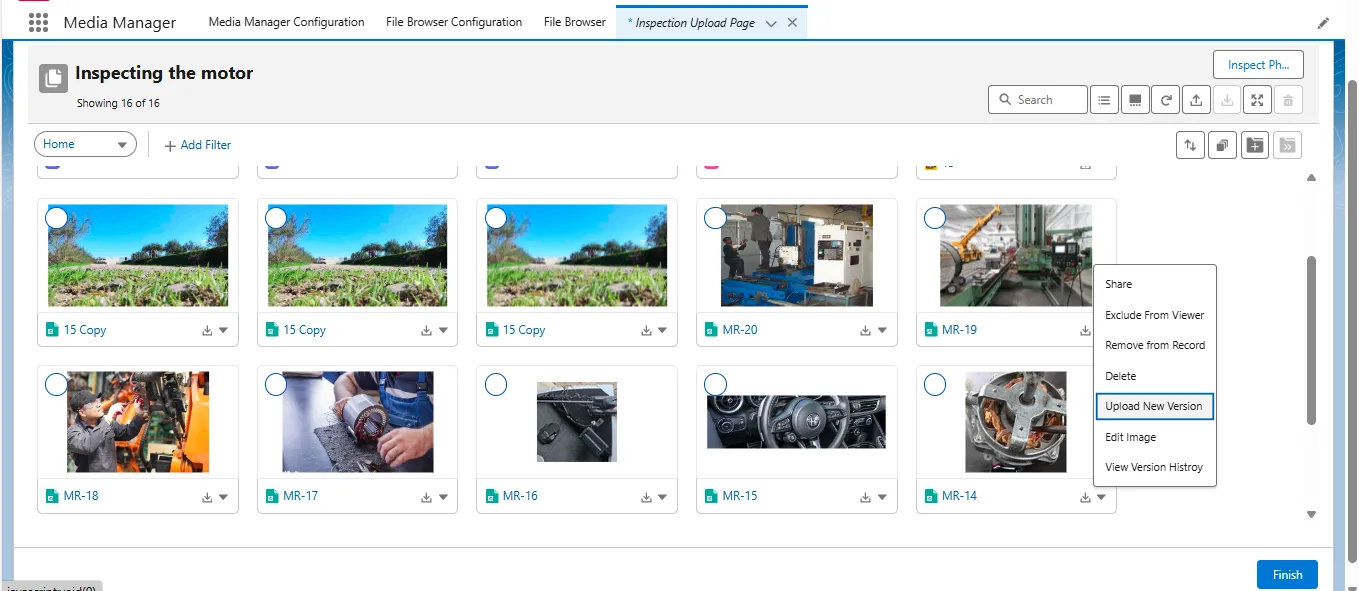
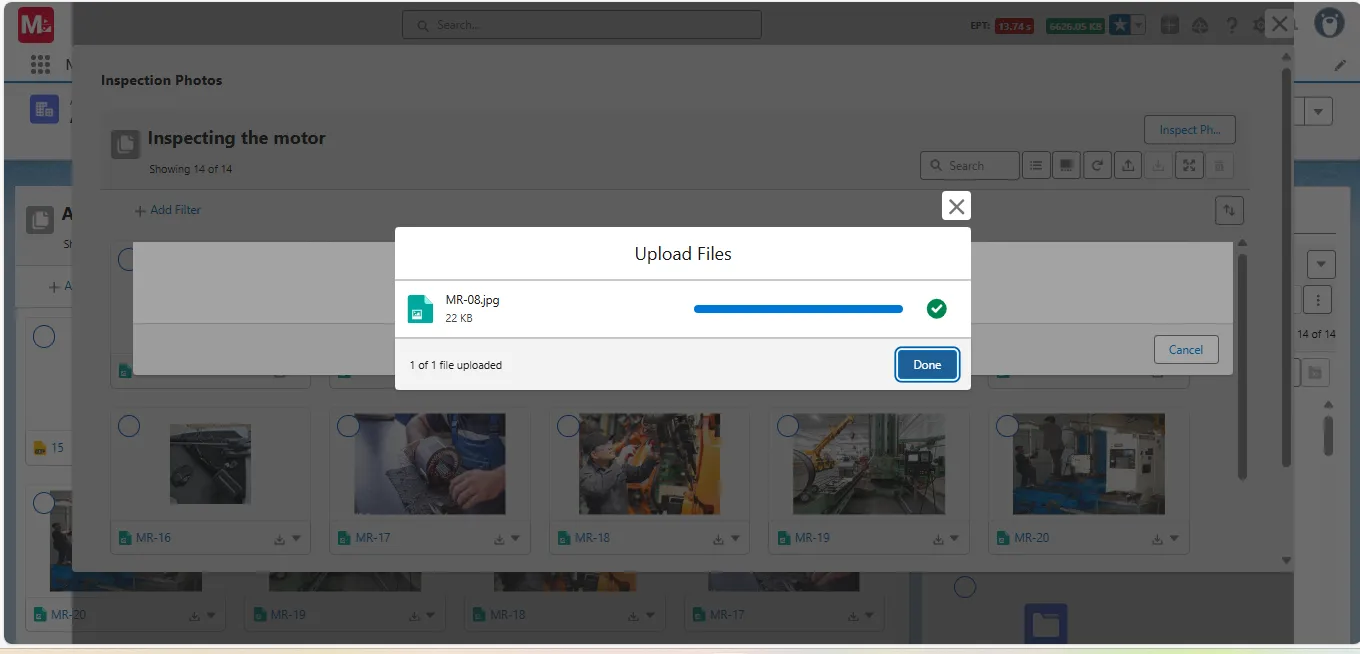
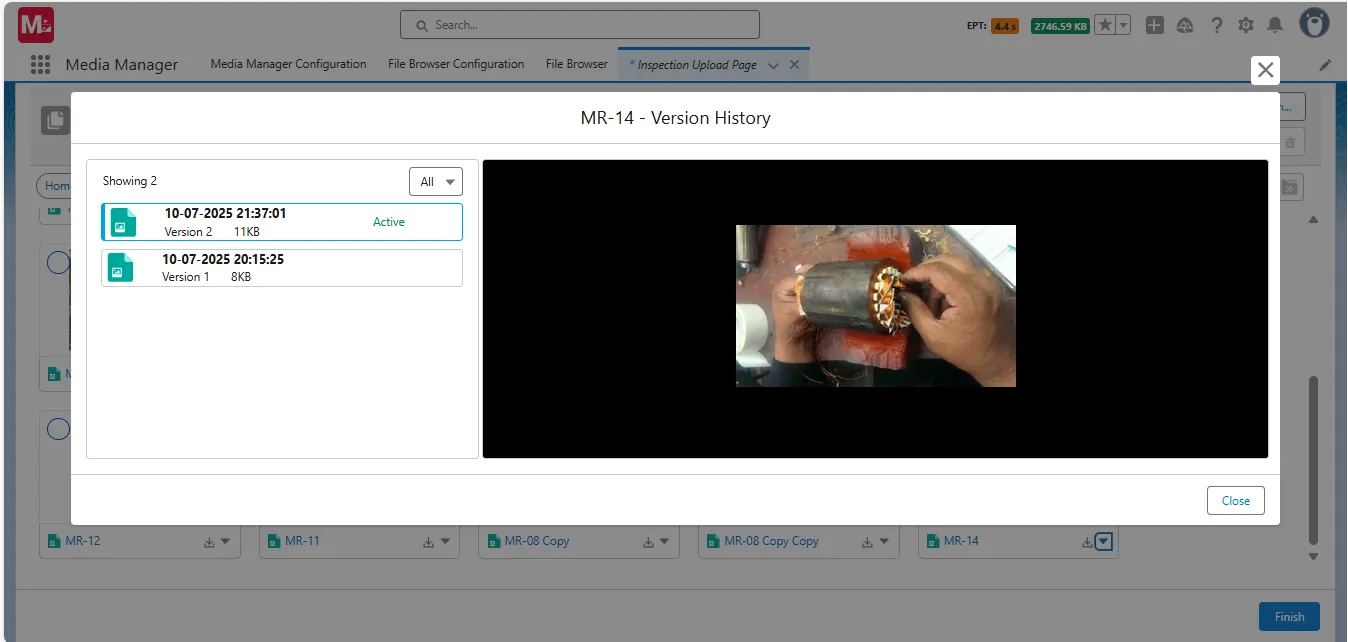
This turns a Flow step from a place to upload files into a place to work with them.
Two Integration Patterns: Flow into Media Manager, or Media Manager into Flow
Depending on how your process is structured, Media Manager supports two directions of integration:
Both patterns work in harmony. A field inspector might open Media Manager from a Flow step, review and upload photos, then trigger the next Flow step — all without switching screens.
Key Capabilities: Media Manager + Salesforce Flow
- Preview Files Instantly: Switch between List, Tile, and Slider views within the Flow step - no separate tab, no record navigation.
- Access Files Across Related Records: File Tree pulls in files from related objects (Case → Account → Contact) so users see full context in one place.
- Organize with Folders and Grouping: Users can create folders, group by type, and filter files - all within the Flow experience.
- Take Actions on Files: Edit, version, download, or annotate files directly from the workspace.
- Trigger Flow Actions from Files: Launch a next step (approval, notification, task creation) directly from Media Manager without leaving the screen.
Practical Use Case: Field Inspector Using a Salesforce Screen Flow
The Scenario
A field inspector is completing a site inspection via a Salesforce Screen Flow. They need to:
- Review previous inspection photos before starting the new assessment
- Upload new images captured on-site
- Organize files by inspection stage (Pre-Inspection, On-Site, Closeout)
- Continue the inspection Flow with full document context intact
Without Media Manager
The inspector uploads photos via the native Flow file component. To review previous photos, they exit the Flow, open the Case record, search the Files list, then return losing their place in the process.
With Media Manager
Click → Media Manager opens in Flow → View all related files → Compare images → Upload and organize new files → Continue inspection Flow
The entire file experience lives inside the process step. No context switching. No lost progress.
Admin Setup: Integrate Media Manager with Salesforce Flow
Step 1: Configure Media Manager
- Create a Media Manager configuration for the target object (e.g. Case).
- Enable File Tree (e.g. Case → Account → Contact) for cross-record file access.
- Turn on Folder View and Grouping to give users organizational tools within the Flow step.
Step 2: Add Flow Integration
- In your Screen Flow, add an action or button element that launches Media Manager.
- Reference the configured Media Manager setup for the relevant object.
Step 3: Validate the End-User Experience
- Run the Flow in preview mode — confirm Media Manager opens, files are accessible, and actions work as expected.
- Test File Tree navigation to confirm related record files appear correctly.
No Apex. No LWC development. No custom integration work.
Before vs. After: What Changes with Media Manager in Flow
Conclusion: Build File-Driven Workflows in Salesforce Without Breaking the Process
Salesforce Flow guides the steps. Media Manager handles the file experience within those steps.
If your processes depend on files and most do, your goal isn't just to let users upload. It's to let them work with files the way they actually need to: previewing, comparing, organizing, and acting without losing their place.
Media Manager + Salesforce Flow gives your teams exactly that. Faster processes. Cleaner file management. No context switching.
Want Files Inside Salesforce Flows?
More Insights for you









Ready to Transform Your Business with Salesforce & AI?
