

Edit Images in Salesforce with Media Manager


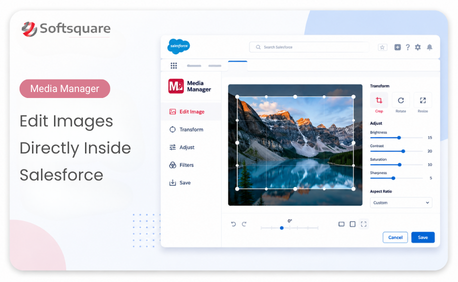
Table of Contents


Salesforce is where teams manage customer records, cases, opportunities, service updates, and supporting documents. But when those records include images, even a small correction can become a manual task.
A user may need to crop a customer-uploaded image, rotate a field photo, reduce image size, or update an image attached to a record. Without in-platform editing, the usual process is inefficient: download the image, edit it outside Salesforce, upload it again, and then decide which version should be used.
That creates extra work for users and more cleanup for Salesforce Admins.
Media Manager helps solve this by allowing users to edit supported Salesforce images directly inside the platform. Users can crop, rotate, compress, zoom, compare, and save edited images without switching to external tools.
Why Image Editing Matters in Salesforce
Images are often attached to records that teams work on every day:
- Case photos uploaded by customers
- Field images captured during site visits
- Product or asset images linked to Accounts, Cases, or custom objects
- Screenshots, proof documents, or issue images used for review
The challenge is not just storing these images. It is managing them when small edits are needed.
Common issues include:
- Unnecessary downloads and re-uploads when users need basic changes
- Duplicate file clutter from repeated uploads
- Version confusion when teams cannot identify the latest image
- Slower workflows because users switch between Salesforce and external tools
- More admin cleanup around file storage, access, and organization
For teams that work heavily with images, these small inefficiencies quickly add up.
How Media Manager Enables Image Editing in Salesforce
Media Manager provides an Edit Image row action that lets users modify supported images directly inside the Media Manager experience.
Users can perform common image changes such as:
- Crop
- Rotate
- Compress
- Zoom in and out
- Undo and redo changes
- Reset the image
- Open fullscreen preview
- Compare original and edited images
This keeps image handling closer to the Salesforce record. Instead of moving between Salesforce, desktop folders, and external editing tools, users can complete basic edits from the same file workspace.

Supported Image Editing Formats
Media Manager supports image editing for:
- PNG
- BMP
- GIF
- JPG
- JPEG
Supported browsers include Chrome, Edge, Firefox, and Safari.
A few important notes:
- Files under 50 KB cannot be compressed using the tool.
- HEIC files are not available for editing.
- HEIC files should be converted to a supported format before editing.
This is useful for Admins to know when teams upload images from mobile devices, especially iPhones.
Save, Replace, or Track Image Versions
Media Manager gives users flexibility in how edited images are saved.
Users can choose from:
- Ask Each Time: prompts the user to decide how the edited image should be saved
- Save as New File: keeps the original and creates a separate edited file
- Overwrite Current File: replaces the current image with the New version
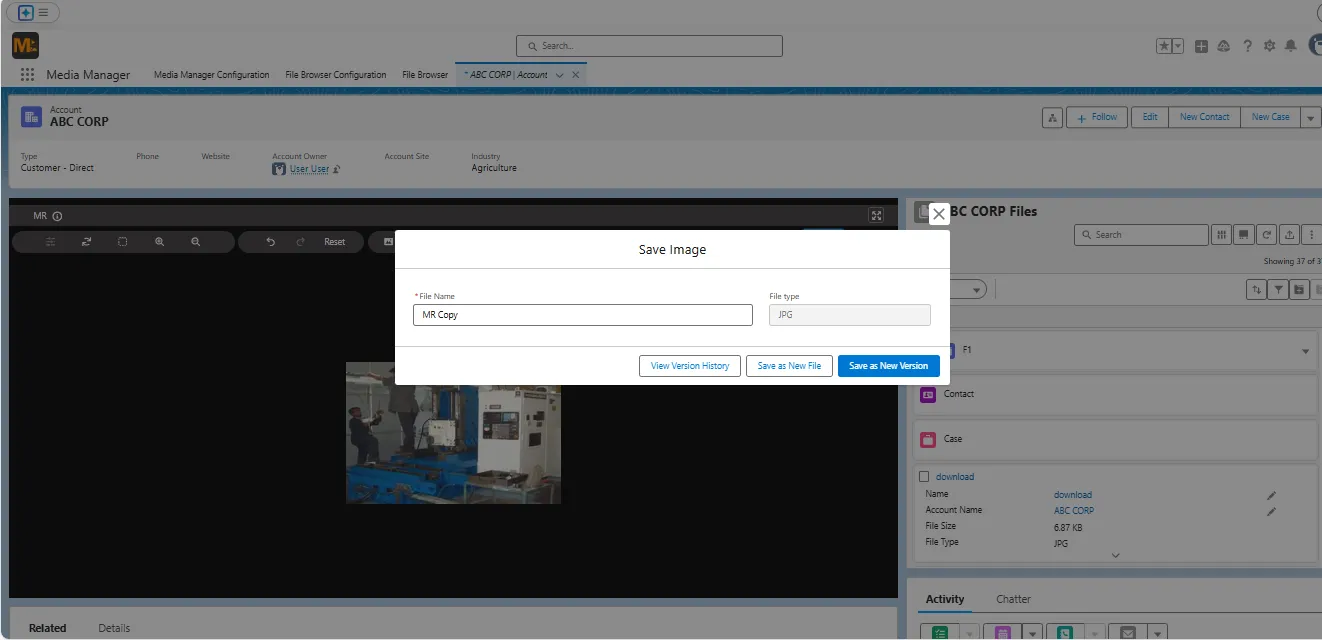
Media Manager also supports Upload New Version, which allows users to replace a file with an updated version while preserving version history. This helps users avoid creating multiple duplicate files for the same image.
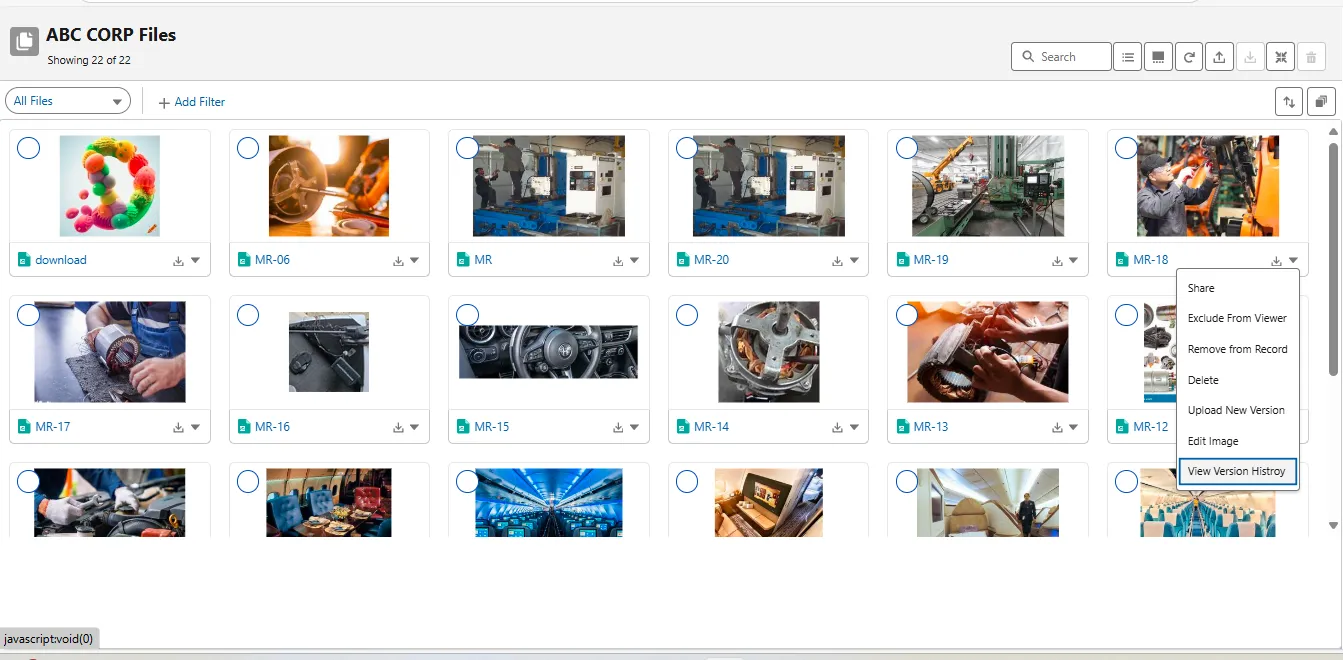
With View Version History, users can review previous versions and see details such as:
- Last Modified Date and Time
- Version Status
- Version Number
- File Size
Only one version can be active at a time.
A Better File Experience Around Image Editing
When users can edit images with Media Manager and also find, preview, and organize files in the same workspace, image handling becomes much more practical inside Salesforce.
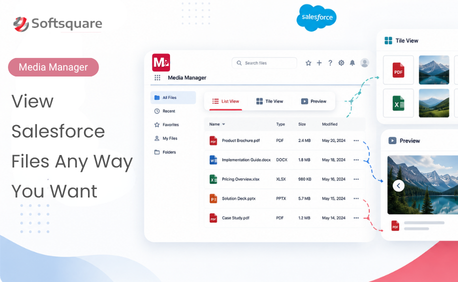
Media Manager supports multiple file viewing options:
- Slider View for carousel-style previews
- List View for tabular or card-based file details
- Tile View for visual file browsing
Admins can also configure grouping and folder-based navigation where supported. For example, users can organize files by File Type, Related Object, or Related Record when the configuration supports it.
With File Tree and Folder View, users can browse files across related Salesforce records in a structured way instead of moving through multiple record pages.
Practical Use Case: Editing Case Images
Consider a service team that needs to edit images in Media Manager while working with customer images attached to Case records.
A customer uploads an issue photo, but the image is too large, incorrectly rotated, or includes unnecessary background details. Without Media Manager, the agent may need to download the image, edit it externally, upload it again, and confirm which version should be used.
With Media Manager, the agent can open the image from the Salesforce record and use the Edit Image action to crop, rotate, compress, compare, and save the updated image.
For users, this reduces tool switching.
For Admins, it helps reduce duplicate files and keeps the right image connected to the right record.
Conclusion
Editing images in Salesforce should not require users to leave the platform for every small correction.
Media Manager allows users to crop, rotate, compress, zoom, compare, and save supported images directly from the Salesforce file workspace. Combined with save preferences, upload new version, version history, multiple views, grouping, and folder-based navigation, it gives teams a cleaner way to manage images inside Salesforce.
For Salesforce Admins, this means fewer manual workarounds, reduced duplicate file clutter, and a more practical file experience for users who work with images every day.
Ready to Transform with AI?
More Insights for you









Ready to Transform Your Business with Salesforce & AI?
