

Overcoming Salesforce List View Limitations with AGrid


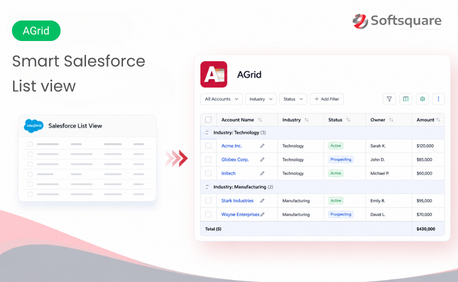
Table of Contents


Salesforce list views are one of the most commonly used features for managing records. From tracking opportunities to monitoring support cases, admins and end users rely on them daily to view, filter, and act on data.
However, as data volume grows and processes become more complex, list views start to show clear limitations - restricted record handling, limited editing flexibility, and a lack of usability for real operational workflows.
AGrid addresses these challenges by transforming standard list views into a scalable, interactive, and configurable grid experience without requiring code.
What Are Salesforce List Views?
Salesforce list views are filtered record lists that help users see a specific set of data from an object, such as Leads, Opportunities, Cases, Accounts, or custom objects. Instead of opening each record one by one, users can review multiple records in a table-like layout and take quick action.
Teams commonly use list views to monitor sales pipelines, track customer cases, manage follow-ups, review approval items, or organize operational records. They are simple, familiar, and widely used across Salesforce because they give users a quick starting point for daily work. They allow users to:
- View records filtered by criteria
- Sort data based on selected fields
- Perform basic actions like edit or delete
Common Use Cases
- Managing sales pipelines (Opportunities, Leads)
- Tracking customer interactions (Cases, Activities)
- Monitoring operational data across objects
Because of their simplicity, teams depend heavily on list views for day-to-day operations. But this simplicity also becomes a limitation as requirements evolve.
Key Salesforce List View Limitations
Salesforce list views work well for simple record tracking, but they can become restrictive when users need to manage larger datasets or perform frequent updates. These Salesforce list view limitations often affect admins, sales teams, service teams, and operations users who depend on list-based workflows every day.
When teams need deeper filtering, larger record visibility, bulk updates, or a more spreadsheet-like experience, native list views may not be enough.
Record Display Limits
Salesforce list views are not designed for handling large datasets efficiently. Users often face constraints when trying to load or navigate through thousands of records.
Limited Inline Editing
Inline editing is restricted and not designed for bulk updates or complex data changes, forcing users to open records individually or rely on external tools.
Poor Handling of Large Data Volumes
As data grows, list views struggle with performance and usability, making it harder to work with real-time operational data.
Restricted Filtering & Sorting
Filtering and sorting capabilities are basic, limiting how users can segment or analyze data dynamically.
Lack of Spreadsheet-like Experience
List views do not provide the flexibility or interaction level users expect from spreadsheet-style tools, especially for bulk operations and quick data analysis.
Business Impact of Salesforce List View Limitations
Salesforce list view limitations do not just affect usability. They can slow down everyday work, increase admin dependency, and make it harder for teams to manage data accurately.
When users cannot easily view, edit, filter, or act on the records they need, business processes become slower and more manual.
Productivity Bottlenecks
Users spend more time navigating records and switching screens instead of working efficiently within a single view.
Inefficient Data Management
Without bulk operations and flexible controls, managing large datasets becomes time-consuming.
Increased Manual Work
Admins and users rely on repetitive manual updates due to lack of scalable editing capabilities.
Poor Decision-Making Due to Incomplete Views
Limited visibility into large datasets or related data restricts the ability to make informed decisions.
What is AGrid for Salesforce?
AGrid is a no-code, Salesforce-native data management tool that can take your standard list views and convert them into dynamic, interactive grids with minimal configurations.
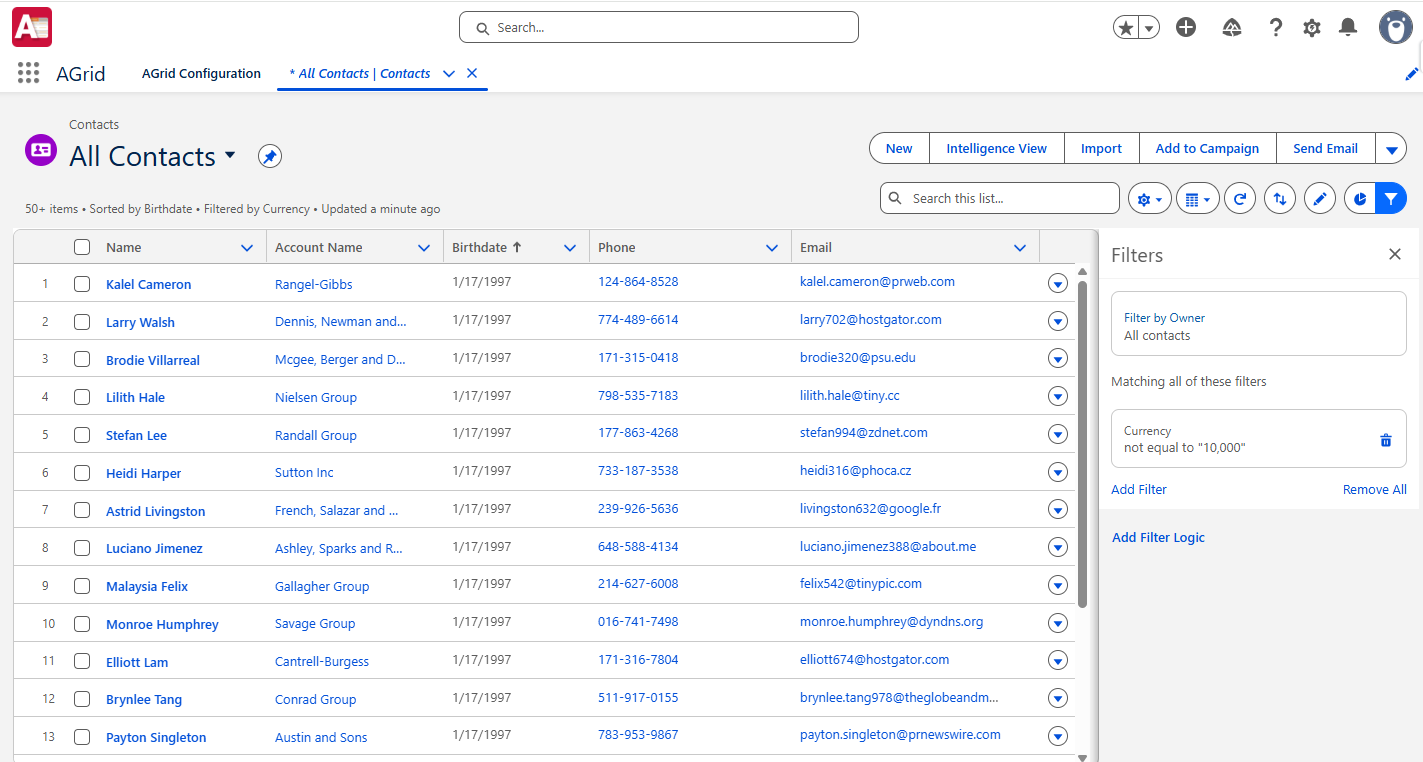
It allows admins to configure views for any Salesforce object and empowers users to manage data efficiently within a single interface.
Key Capabilities
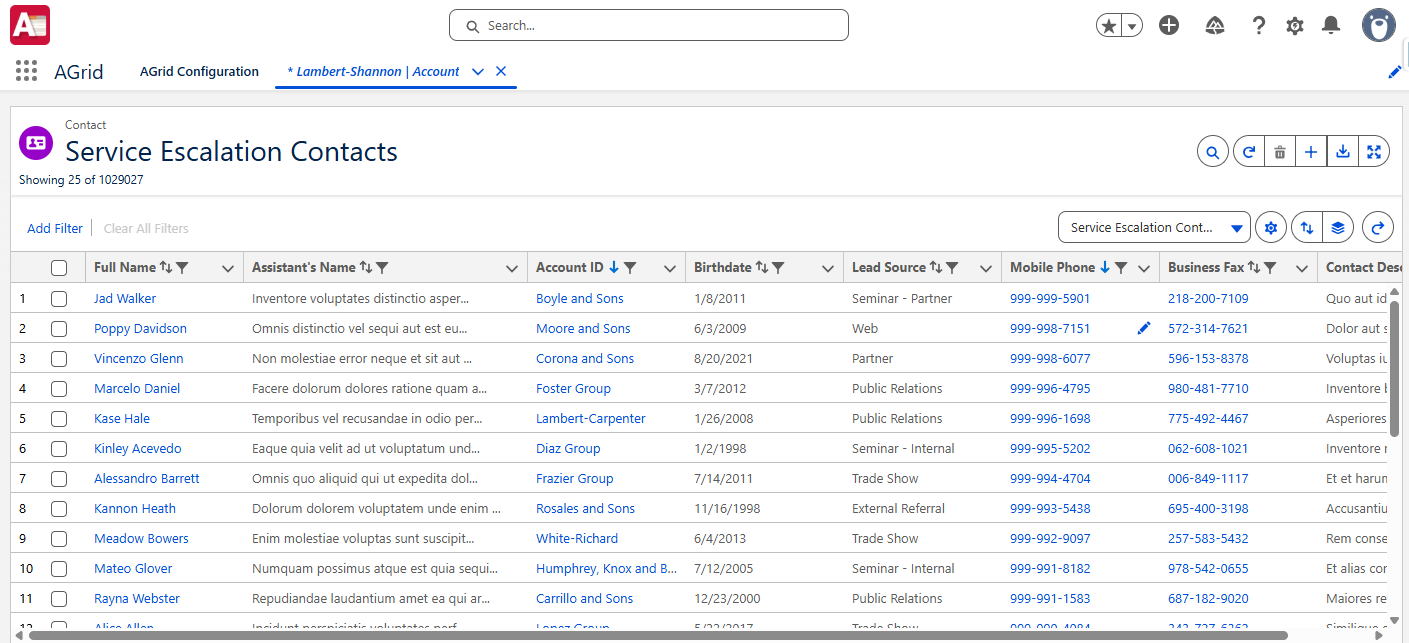
- Grid-based UI for structured data handling
- Bulk actions including create, update, and delete
- Inline editing across records and supported parent fields
- Support for up to 10,000 records in a grid view
- Multi-level sorting and advanced filtering
- Built-in charts and Kanban views for data visualization
AGrid is designed to scale with business needs while staying aligned with Salesforce’s security and permission model.
How AGrid Helps to Overcome Salesforce List View Limitations
AGrid helps teams move beyond native Salesforce list view limitations by turning record management into a more flexible grid-based experience. Users can work with larger datasets, edit records inline, apply advanced filters, use dynamic views, and take action without constantly switching between pages.
For admins, AGrid provides a no-code way to configure powerful list experiences while still respecting Salesforce permissions and security.
Handle Large Data Volumes Seamlessly
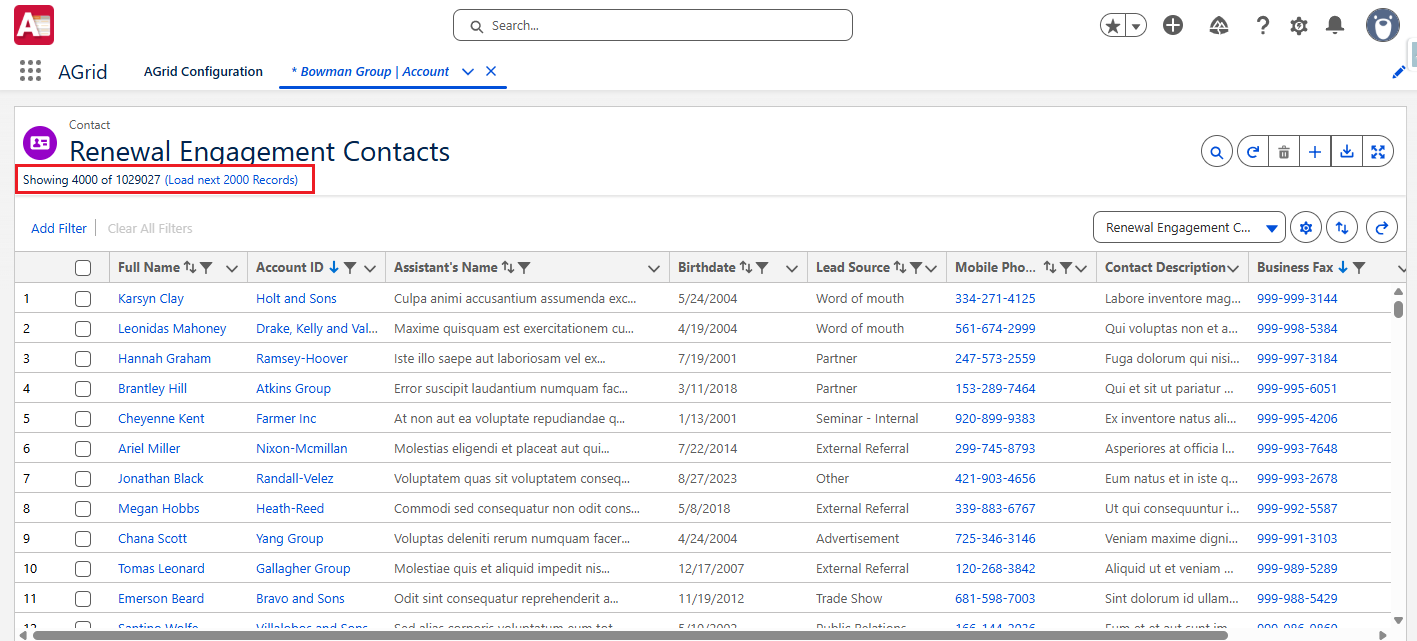
AGrid supports loading up to 2,000 records at a time with a maximum capacity of 10,000 records in a single grid view, enabling users to work with large datasets efficiently
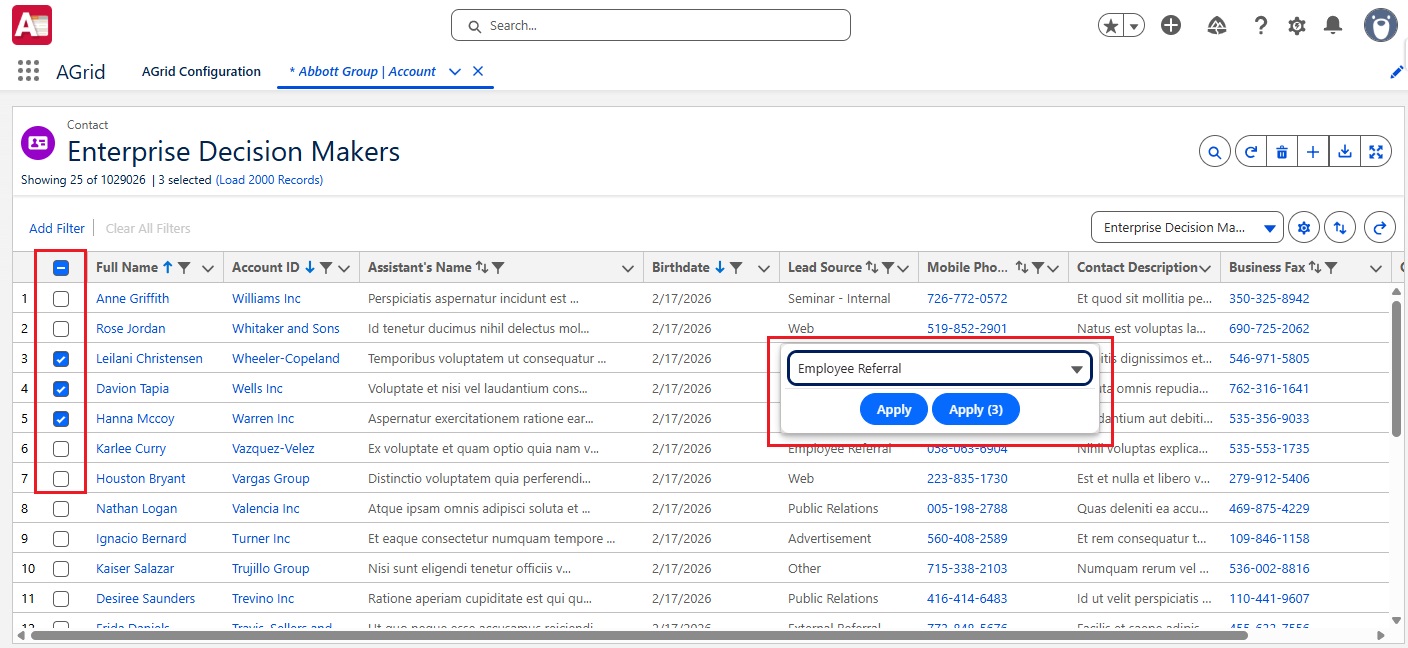
Advanced Inline Editing
Users can perform inline edits across multiple records, with support for bulk updates and partial save functionality ensuring valid changes are saved even when some records have errors.
Enhanced Filtering & Sorting
AGrid enables:
- Multi-level sorting (up to three levels)
- Advanced filters with operators based on field types
- Use of global variables for dynamic filtering
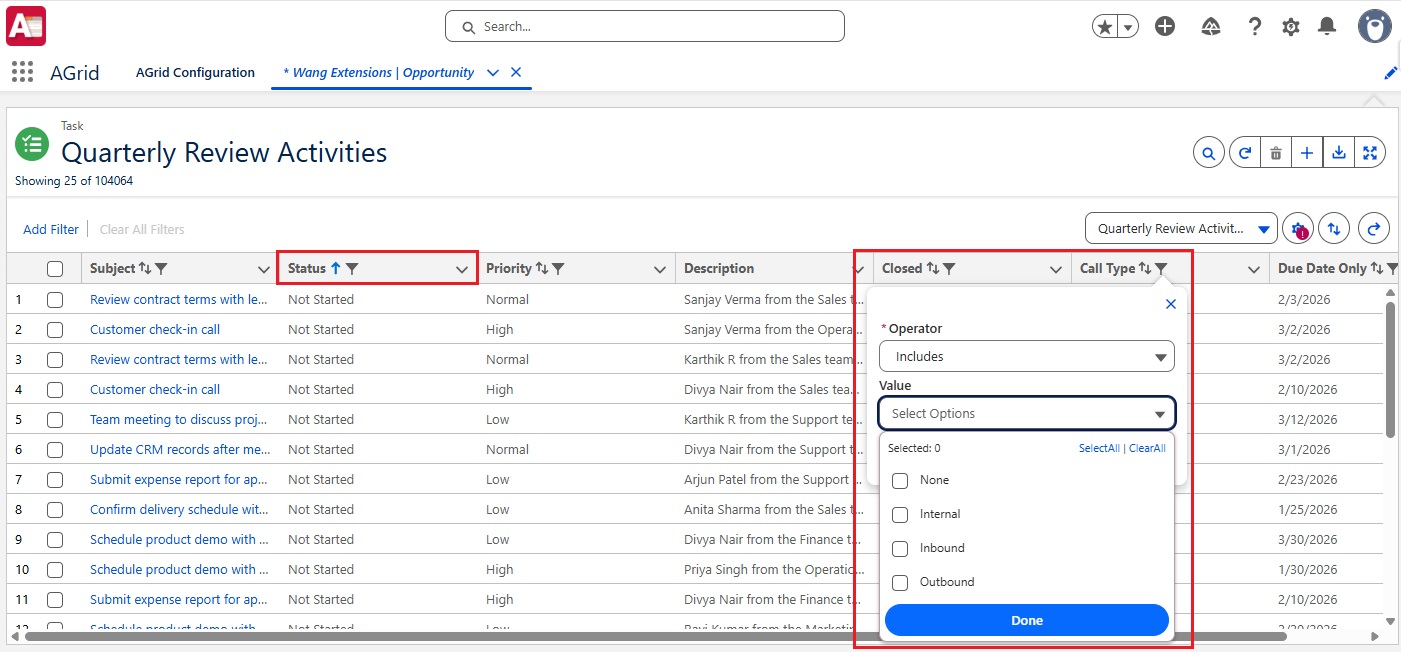
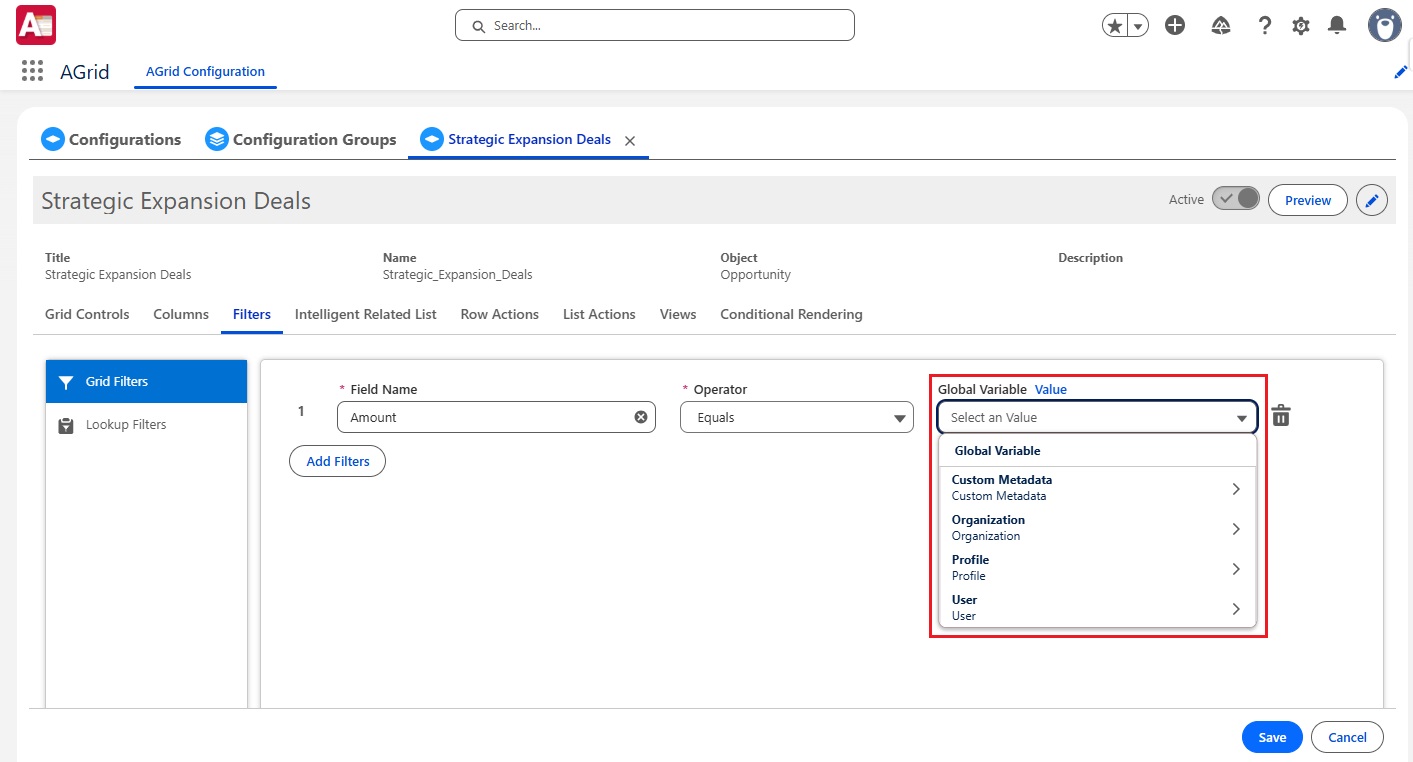
This provides far more control compared to standard list views.
Improved User Experience
AGrid introduces a more interactive interface with:
- Kanban view for visual workflow management
- Embedded charts for quick insights
- Customizable UI elements like column width, text wrap, and layout

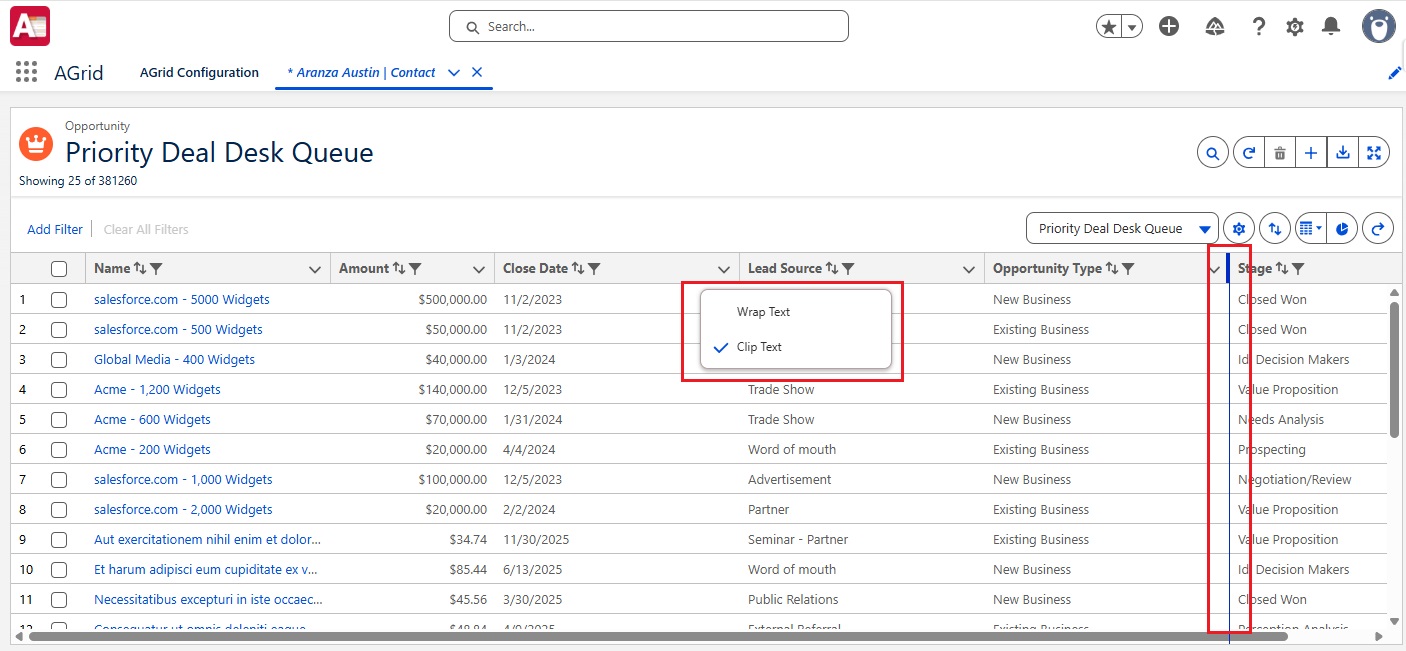
All designed to improve usability and reduce friction in daily operations.
Better Data Visibility
With features like:
- Grouping records across multiple levels
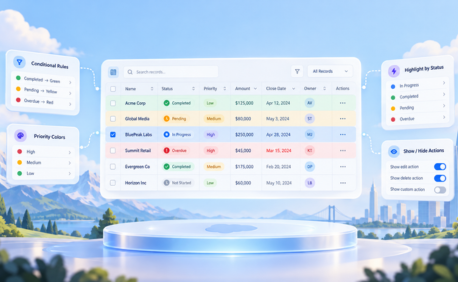
- Conditional highlighting for key data points
- Intelligent Related Lists for cross-object visibility
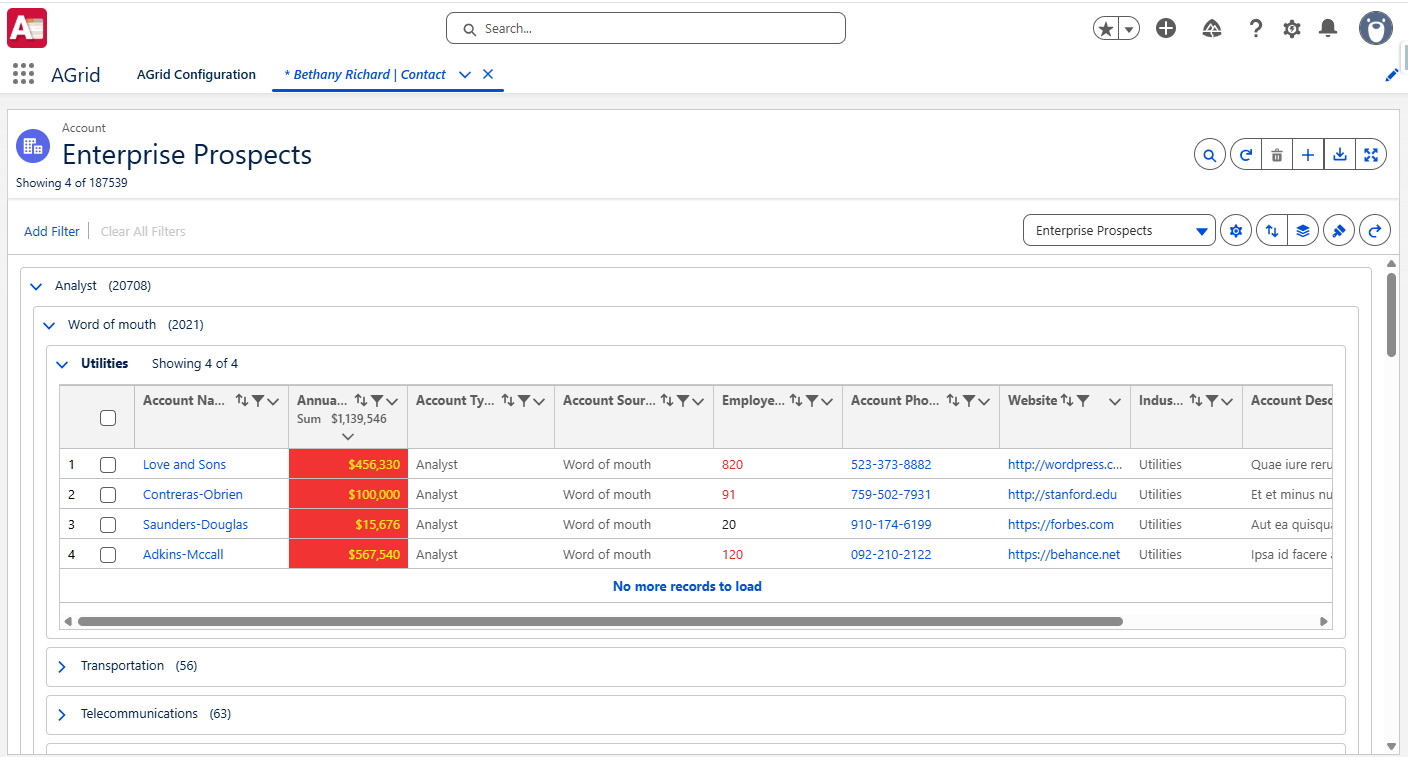
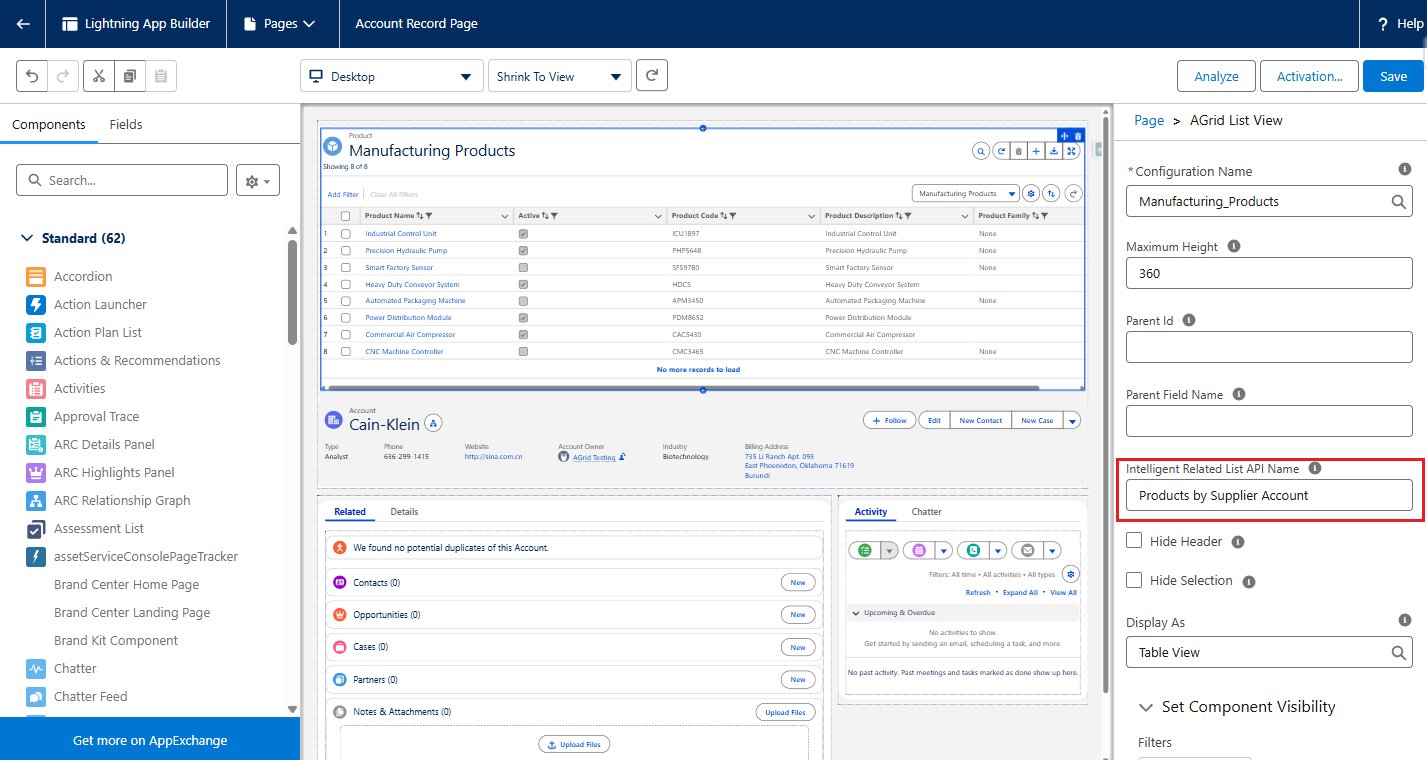
AGrid provides a unified and comprehensive view of data that standard list views cannot offer.
Comparison of Capabilities: Salesforce List Views Vs AGrid
Native list views are useful for basic record visibility, but AGrid is designed for teams that need more control, more flexibility, and better usability inside Salesforce.
The comparison below shows how AGrid extends everyday list management beyond standard Salesforce list view capabilities.
When Should You Use AGrid?
AGrid is useful when your Salesforce users need more than a basic list view. It is designed for teams that regularly manage high-volume records, update data in bulk, or need better visibility across related information.
Use AGrid when your users need to:
- Work with larger record sets without losing visibility.
- Edit multiple records faster using inline editing and bulk actions.
- Apply more advanced filters and sorting to find the right records quickly.
- View related or cross-object data in a more connected way.
- Use charts, Kanban views, grouping, and summaries to understand data faster.
- Reduce repetitive navigation between record pages.
- Give end users a more spreadsheet-like experience inside Salesforce.
This makes AGrid especially helpful for sales, service, operations, and admin teams that rely on list-based workflows every day.
Conclusion
Salesforce list views are effective for basic record management, but they fall short when dealing with real-world business complexity and scale.
AGrid extends these capabilities into a powerful, flexible data management layer enabling teams to work faster, handle more data, and make better decisions without leaving Salesforce.
For organizations looking to move beyond the limitations of standard list views, AGrid provides a practical and scalable solution.
Ready to Improve Your List Views?
More Insights for you








Ready to Transform Your Business with Salesforce & AI?
